A deep cavity does not automatically mean that you need a root canal, and severe pain does not prove that the tooth can be saved. You will learn which warning signs matter, how a dentist confirms the pulp’s condition, and how to compare a filling, vital pulp therapy, root canal treatment, and extraction.
Key takeaways
- Lingering or spontaneous tooth pain needs prompt dental assessment.
- A filling suits decay that has not irreversibly damaged the pulp.
- Root canal treatment preserves a restorable infected tooth; extraction removes it.
- Children, immature roots, and previously treated teeth need different decisions.
Which symptoms suggest that decay has reached the pulp?
Deep tooth decay symptoms depend on how the pulp is responding. Brief sensitivity that stops promptly after hot, cold, or sweet food is removed suggests reversible pulp irritation. Lingering tooth sensitivity, spontaneous tooth pain, throbbing, poorly localized pain, or night tooth pain is more consistent with irreversible pulpitis and needs dental assessment.
| Sign | What it may suggest | Important point |
|---|---|---|
| Brief sensitivity | Reversible pulp irritation | It can settle after decay removal and a well-sealed filling |
| Lingering hot or cold pain | Irreversible pulpitis | The inflamed pulp may require pulp treatment or root canal treatment |
| Pain on biting or tapping | Inflammation around the root | A crack, high filling, gum disease, or trauma can cause the same symptom |
| Darkening of the tooth | Pulp death | A dead tooth can be painless |
| Gum boil or bad taste | Drainage from infection around the root | The infection still needs treatment even if pressure is relieved |
| No pain | Pulp death or a chronic root infection | An infected tooth can be discovered only on an X-ray |
Facial swelling, fever, malaise, difficulty swallowing, difficulty breathing, or rapidly worsening swelling requires urgent dental or medical assessment. Do not wait for a routine appointment if breathing or swallowing is affected.
Antibiotics alone do not remove the infected pulp or drain an abscess. Drainage, root canal treatment, or extraction provides definitive care; antibiotics mainly matter when infection has systemic spread or immediate dental treatment is unavailable.
How does a dentist determine whether a root canal is necessary?
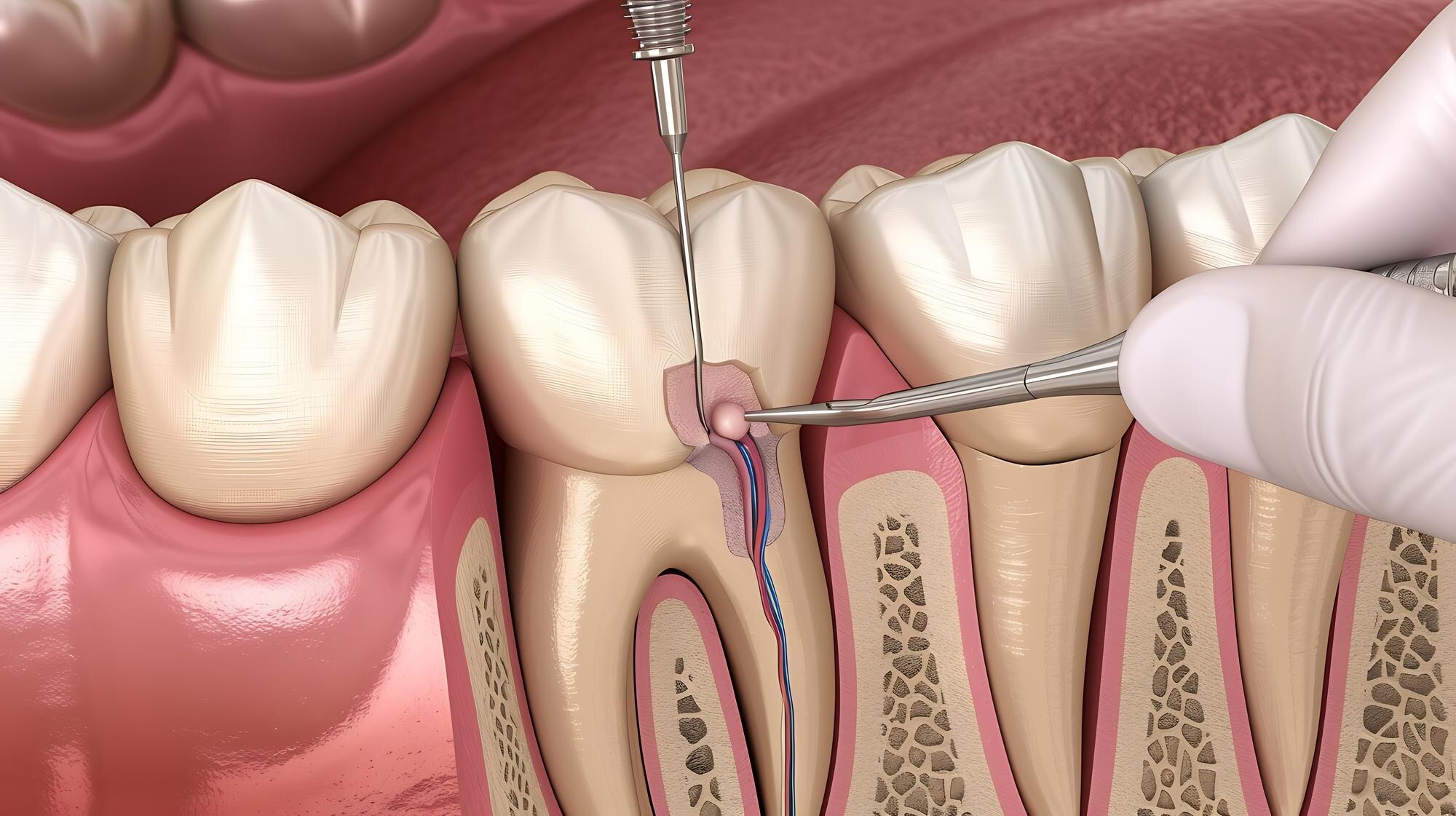
A root canal diagnosis combines your pain history with clinical findings; no single result decides it. The dentist visually examines decay, cracks, fillings, crowns, gum swelling and tooth colour, then checks percussion, palpation, bite response and periodontal probing. Appropriately angled dental X-rays reveal decay, bone changes, root shape and infection that one view can miss.
The examination may include these comparisons:
- A cold test for teeth: The dentist compares the response with nearby healthy teeth. Brief pain that stops promptly differs from lingering pain.
- An electric pulp test: A response shows nerve sensitivity, not proof that the pulp is healthy.
- Bite testing: Pain on release or pressure can point toward a crack, but it does not identify the cause alone.
- Percussion and palpation: Tenderness can indicate inflammation around the root.
- Periodontal probing: A narrow, deep pocket can support suspicion of a crack or local gum defect.
Symptoms and a radiograph alone cannot establish pulp vitality or irreversible inflammation. Pulp sensibility tests can produce false-positive or false-negative results because of moisture, restorations, neighbouring teeth, trauma or patient response.
Pain on biting or tapping can come from deep decay, a cracked tooth, a failed filling or crown, a high restoration, gum disease, trauma or a dental abscess. These conditions require different treatment; adjusting a high restoration or treating gums will not cure diseased pulp, while a root canal will not repair every crack.
When is a filling enough, and when is pulp treatment or a root canal considered?
A filling is enough when the pulp has reversible pulpitis: sensitivity is brief and stops promptly after hot, cold, or sweet stimulation ends. That response can settle after selective caries removal and a well-sealed filling. Cavity depth alone does not decide treatment.
Lingering pain after stimulation, spontaneous throbbing, or poorly localized pain is more consistent with irreversible pulpitis. In a selected tooth that remains vital, vital pulp therapy may preserve living pulp:
- Indirect pulp treatment, when decay is removed selectively and the remaining dentin is protected.
- Direct pulp capping, when a small pulp exposure is suitable for sealing.
- Partial pulpotomy, when the inflamed coronal pulp is removed.
- Full pulpotomy, when all coronal pulp is removed but the root pulp remains healthy enough to preserve.
These procedures depend on controlling bleeding, isolating the tooth from saliva and bacteria, and placing a restoration that seals well. If bleeding cannot be controlled, the pulp is irreversibly inflamed or necrotic, or the tooth cannot maintain a seal, root canal treatment becomes relevant when the tooth is restorable.
A dentist must confirm the pulp condition through examination and testing; pain alone cannot select the treatment.
Should you preserve the tooth with a root canal or choose extraction?
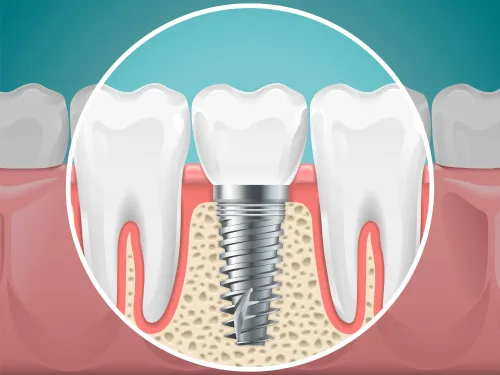
Choose root canal treatment when the tooth is a restorable tooth with enough sound structure and support to function after treatment. Extraction removes the infection source, but it also creates a replacement decision involving an implant, bridge, or removable partial denture.
| Option | Main benefit | Main limitation |
|---|---|---|
| Root canal treatment | Retains the natural tooth | Fails as a predictable choice when the tooth cannot be sealed, restored, or supported |
| Extraction | Removes an unrestorable or fractured tooth | Leaves a gap that may need an implant, bridge, or removable partial denture |
| Extraction followed by replacement | Restores chewing and appearance | Adds further treatment, healing time, and maintenance |
Root canal treatment is not predictable with a vertical root fracture, a crack extending below the gum or into the root, too little remaining tooth structure, severely lost periodontal support, or an otherwise unrestorable tooth. Treating the pulp cannot repair a split root or rebuild a foundation that cannot hold a restoration.
A root-filled tooth still needs a durable final restoration. A premolar or molar that has lost substantial structure often needs cuspal coverage, such as a crown after root canal, because unsupported cusps are more likely to fracture under chewing forces.
At Dr. Nair’s Dental Care and Implant Center, this choice should follow examination, X-rays, crack and periodontal assessment, and evaluation of restorability—not pain severity alone. A clinical assessment determines whether preserving the tooth is sensible or whether extraction and planned replacement offer the more reliable result.
Related services
Root Canal Treatment Root Canal Treatment Root Canal Treatment for Pain Relief and Tooth Preservation Save your natural tooth and eliminate dental pain with our advanced root canal treatment. |
Dental Fillings Dental Fillings Dental Fillings for Strong, Healthy Teeth Restore the strength and function of your teeth with durable, tooth-colored dental fillings. |
How do age, previous treatment, and root development change the decision?
An immature permanent tooth with an open root end does not follow the standard adult plan. If its pulp remains vital, preserving that vitality can allow the root walls to thicken and development to continue. If the pulp is necrotic, suitable cases may receive regenerative endodontic treatment, also called regenerative endodontics, or apexification.
For primary teeth, root canal in children depends on:
- Pulpotomy when the remaining pulp is vital and the tooth can be restored.
- Pulpectomy when infection has affected the root canals but the tooth is worth retaining.
- Restoration when the tooth is restorable and pulpal treatment is unnecessary.
- Extraction when decay or fracture makes the tooth unrestorable, root resorption is advanced, or retaining it threatens the developing permanent successor.
The child’s age and the successor’s stage of development also matter. Removing a primary tooth too early can affect space and eruption, while retaining a badly infected tooth can harm the permanent tooth beneath it.
A previously root-filled tooth can later hurt or develop an apical lesion because of missed anatomy, poor sealing, new decay, leakage around a restoration, or fracture. Root canal retreatment or endodontic surgery follows evaluation of the cause, remaining tooth structure, and restorability—not pain severity alone. A painless apical lesion still requires assessment.
Frequently asked questions
Which symptoms suggest that decay has reached the pulp?
Lingering sensitivity after hot or cold foods, spontaneous pain, throbbing, poorly localized pain, and night pain suggest significant pulp inflammation or infection. Brief sensitivity that stops promptly after the trigger is removed points more toward reversible irritation.
How does a dentist determine whether a root canal is necessary?
The dentist reviews your pain history, examines the tooth, tests its response to cold or heat, checks for tenderness when biting or tapping, and takes dental X-rays. The diagnosis also depends on whether the tooth can be restored.
When is a filling enough, and when is pulp treatment or a root canal considered?
A filling is enough when decay is removed and the pulp remains healthy or reversibly irritated. Pulp treatment or a root canal is considered when inflammation is irreversible, the pulp is dead, or infection has reached the root canal system.
Should you preserve the tooth with a root canal or choose extraction?
Preserve the tooth with root canal treatment when enough healthy tooth structure remains for a durable restoration and the tooth has a favourable prognosis. Extraction is considered when the tooth cannot be restored, has a severe crack, inadequate support, or a poor long-term outlook.
How do age, previous treatment, and root development change the decision?
Children with developing roots may need vital pulp therapy or regenerative procedures rather than standard root canal treatment. Previous root canal treatment, calcified canals, broken instruments, and immature roots can require a different plan and specialist assessment.
Related service
Advanced Gum Treatment for Healthier Gums and Teeth Advanced Gum Treatment for Healthier Gums and Teeth Protect your smile with advanced gum treatment designed to restore and maintain healthy gums. |